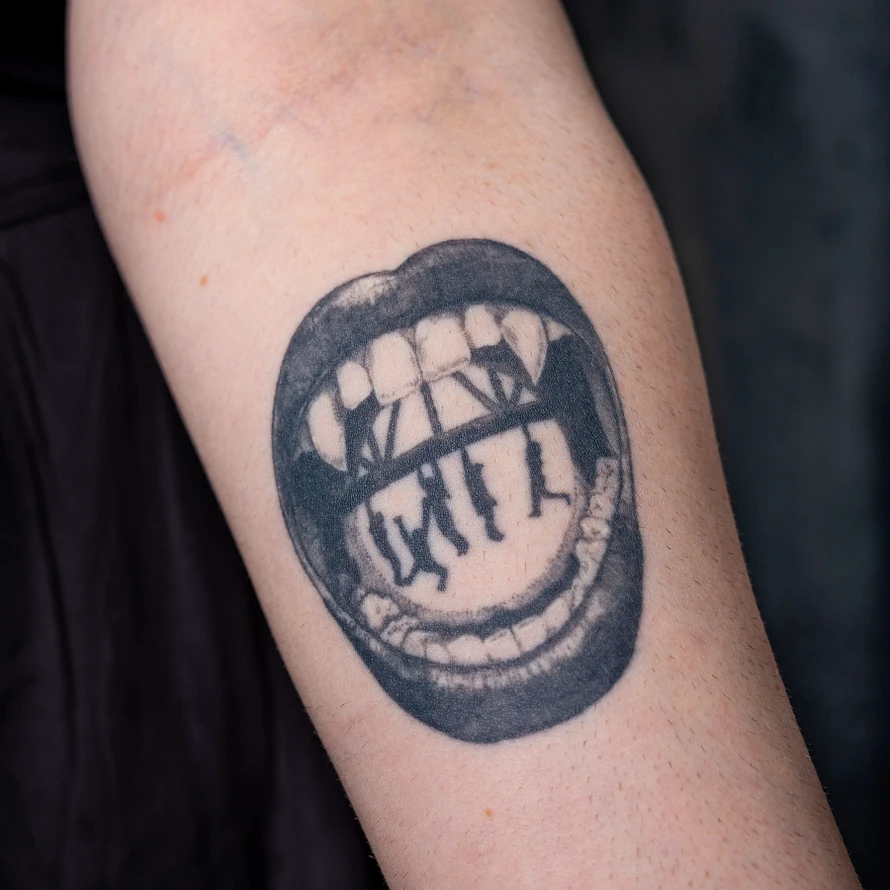
My full aftercare walkthrough covers the day-to-day of washing and moisturizing. This is the rest of it: the questions I get after that, once a tattoo is a week or two in and starting to do things people don't expect.

Sun Protection

UV breaks tattoo ink down over time. Yes, even here in North Carolina, where it's easy to underestimate how much sun you're actually getting. Once your tattoo is fully healed, SPF 30 or higher whenever it's exposed keeps it sharp for the long haul. Somewhere sunnier than usual, like a beach trip, bump that up to SPF 50.

Before it's healed, skip sunscreen on the area entirely. Broken skin and sunscreen don't mix. Just keep it covered instead.

What Not to Use On It

A few things people reach for that actually work against healing: Vaseline and heavy ointments trap moisture and bacteria under a thick layer instead of letting the skin breathe. Raw coconut oil is another one. It's pore-clogging, which is the last thing healing skin needs.

Stick to a thin layer of what's already in my aftercare guide, and you'll heal faster and cleaner than piling on more product.

Infection Warning Signs

Some redness, warmth, and mild itching in the first couple of days is normal. That's just healing. What's not normal: redness that's getting worse instead of better after day 3, red streaks spreading out from the tattoo, pus that's yellow, green, or foul-smelling, a fever, or swelling that feels hot and hard.

Any of that, stop guessing and see a doctor. It's rare, but it's not something to wait out on your own.


Somewhere around weeks 2 to 4, your tattoo might look milky or a little faded, like the color's not quite there. That's not the ink fading. It's a new layer of skin settling over it while the deeper layers finish healing underneath.

The surface heals in about 2 to 3 weeks, but the deeper skin takes another 3 to 4 months to fully remodel. That dull stage clears up on its own as it settles. Give it time before you panic.
Most of what makes a tattoo appointment go smoothly happens before you ever sit in the chair. I've had clients show up dehydrated, hungover, starving, or covered in lotion five minutes before we start, and every one of those things makes the session harder than it needs to be. None of it is complicated. It just has to happen ahead of time.

Two Weeks Out

Start hydrating early, plain water, moisturizer twice a day if that's not already your routine. Skin that's well-hydrated holds ink better and heals faster, and it's the one piece of prep that actually needs lead time to work. If your skin runs dry, add exfoliating at the start of that window, then again the day before your appointment, followed by a good moisturizer.

The Night Before

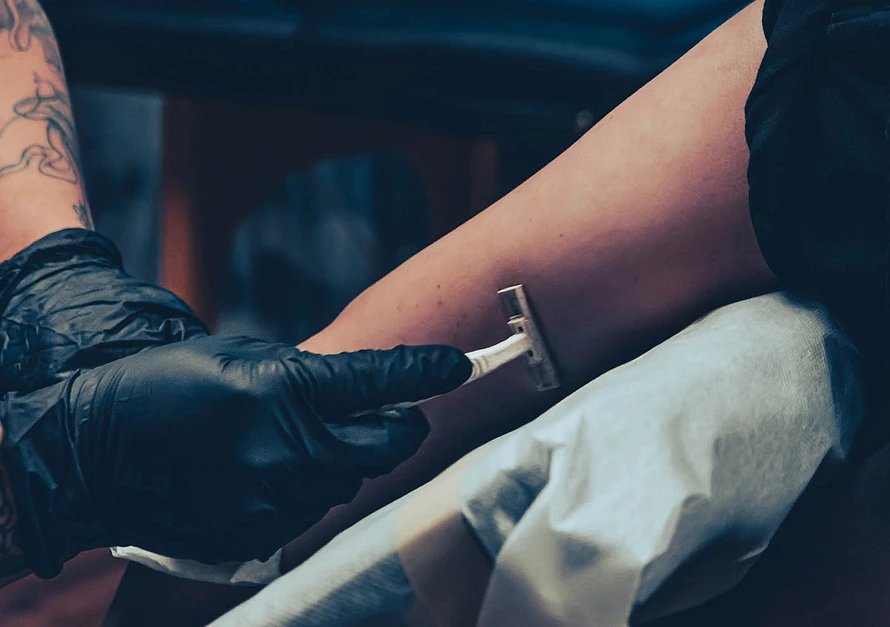
Skip the alcohol and get real sleep. Both affect how your body handles the session: alcohol thins your blood, which means more bleeding and a harder time holding ink, and being exhausted makes a long sit feel a lot longer. You're welcome to trim the tattoo area yourself if you want to; I'll give it a proper shave once you're here either way.

Day Of

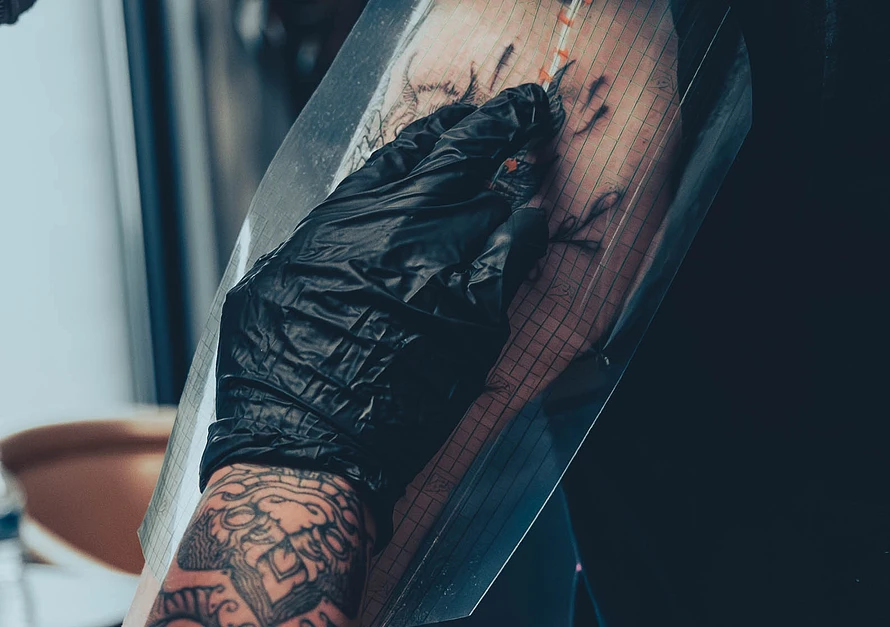
Don't put lotion on the area the day of your appointment. It's hard to fully remove before we start, and it can interfere with the stencil. Eat a real meal beforehand; protein helps more than you'd think. If it's a longer session, bring snacks. Wear something that gives easy access to the area without you having to fully undress. I'll never ask for more than necessary, and you're welcome to bring a blanket or something to keep you comfortable. Music, a book, a friend to text, whatever keeps you present is fine. Talking is welcome, never required

What About Numbing Cream?

Allowed, but I recommend against it. In my experience it tends to wear off early, right when you're deep into a longer piece, which makes the second half more intense, not less, and can lead to harder, less predictable healing. If it wears off mid-session, you're still charged for the time booked either way. I do have a numbing spray that takes the edge off slightly, used only after the linework is done.

Getting the tattoo is one appointment. Healing it is the next few weeks, and it matters just as much. How you care for it now decides whether this piece looks as good in ten years as it does today.

Traditional Healing

Leave the bandage on 2–4 hours. Wash your hands before you touch it.

For the first 3–4 days, wash 2–3 times a day with an antibacterial, fragrance-free soap — Dial, HibiClens, or unscented Dr. Bronner's — using just your hands, no washcloth or loofah. Pat dry with a clean paper towel (not a regular towel), let it air-dry 5–10 minutes, then a thin layer of unscented healing ointment — CeraVe or BioTat. Don't smother it.

Around day 4, it'll start to peel or flake — don't pick at it. Switch to a gentle, fragrance-free lotion and keep the area moisturized for the next several weeks. Indefinitely is even better.

Affiliate picks: Dial → · HibiClens → · Dr. Bronner's → · TegaDerm/Second Skin →

Second-skin/TegaDerm Healing

Leave it 3–5 days, then remove in the shower, pulling in the direction of hair growth. Wash, pat dry, air dry, moisturize as above. If I didn't apply it for you, you can self-apply within 24 hours — wash and fully dry the area first, no ointment underneath, leave about an inch of border, and overlap edges if applying in sections.

Small bubbles under the bandage are normal — don't pop them. Redness or bumps off the tattoo itself? Remove the bandage right away and follow the standard healing steps above. Leftover adhesive is normal too — it comes off with a few washes, no rubbing alcohol or abrasives.