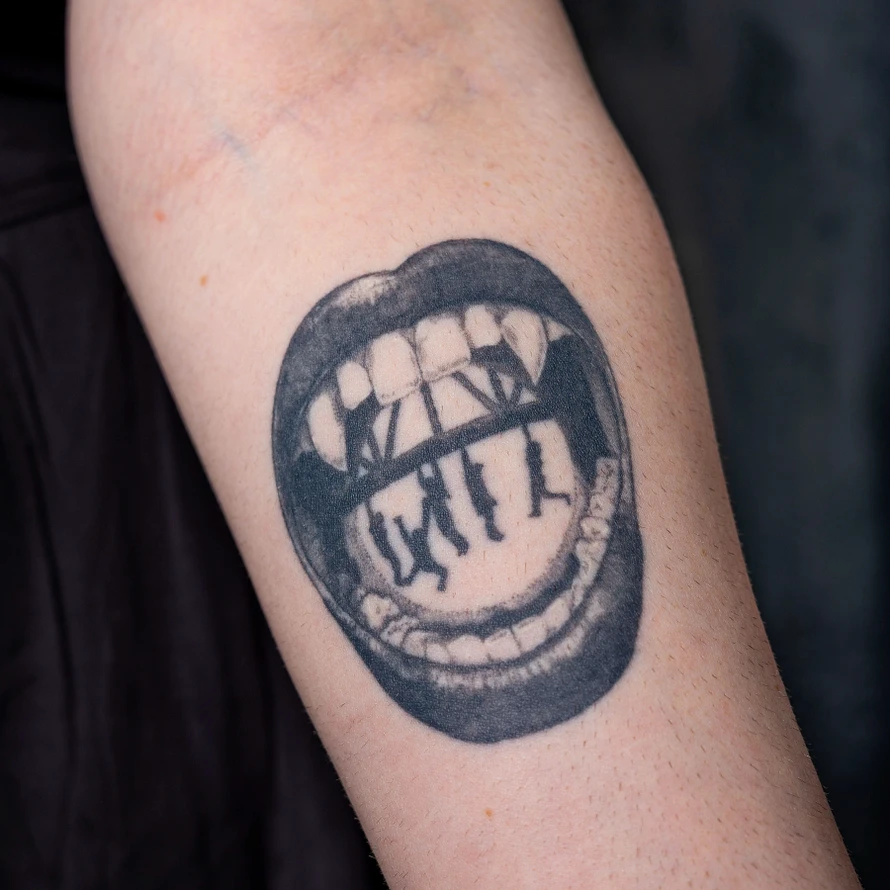
 My full aftercare walkthrough covers the day-to-day of washing and moisturizing. This is the rest of it: the questions I get after that, once a tattoo is a week or two in and starting to do things people don't expect.
Sun Protection
UV breaks tattoo ink down over time. Yes, even here in North Carolina, where it's easy to underestimate how much sun you're actually getting. Once your tattoo is fully healed, SPF 30 or higher whenever it's exposed keeps it sharp for the long haul. Somewhere sunnier than usual, like a beach trip, bump that up to SPF 50.
Before it's healed, skip sunscreen on the area entirely. Broken skin and sunscreen don't mix. Just keep it covered instead.
What Not to Use On It
A few things people reach for that actually work against healing: Vaseline and heavy ointments trap moisture and bacteria under a thick layer instead of letting the skin breathe. Raw coconut oil is another one. It's pore-clogging, which is the last thing healing skin needs.
Stick to a thin layer of what's already in my aftercare guide, and you'll heal faster and cleaner than piling on more product.
Infection Warning Signs
Some redness, warmth, and mild itching in the first couple of days is normal. That's just healing. What's not normal: redness that's getting worse instead of better after day 3, red streaks spreading out from the tattoo, pus that's yellow, green, or foul-smelling, a fever, or swelling that feels hot and hard.
Any of that, stop guessing and see a doctor. It's rare, but it's not something to wait out on your own.
Somewhere around weeks 2 to 4, your tattoo might look milky or a little faded, like the color's not quite there. That's not the ink fading. It's a new layer of skin settling over it while the deeper layers finish healing underneath.
The surface heals in about 2 to 3 weeks, but the deeper skin takes another 3 to 4 months to fully remodel. That dull stage clears up on its own as it settles. Give it time before you panic.